
The market is flooded with ai seo tools, making it challenging to identify which ones deliver real results. But the right ai tools for seo can reshape your content performance. One blog scaled from 70k to over 750,000 impressions in just three months using a solid content engine. That’s why choosing the best ai seo tools matters.
This piece reviews 13 top ai powered seo tools for 2026, including both free and paid ai seo software options. We’ll compare the best ai seo tools 2025 has carried forward, covering features and pricing for different use cases.
Rankability
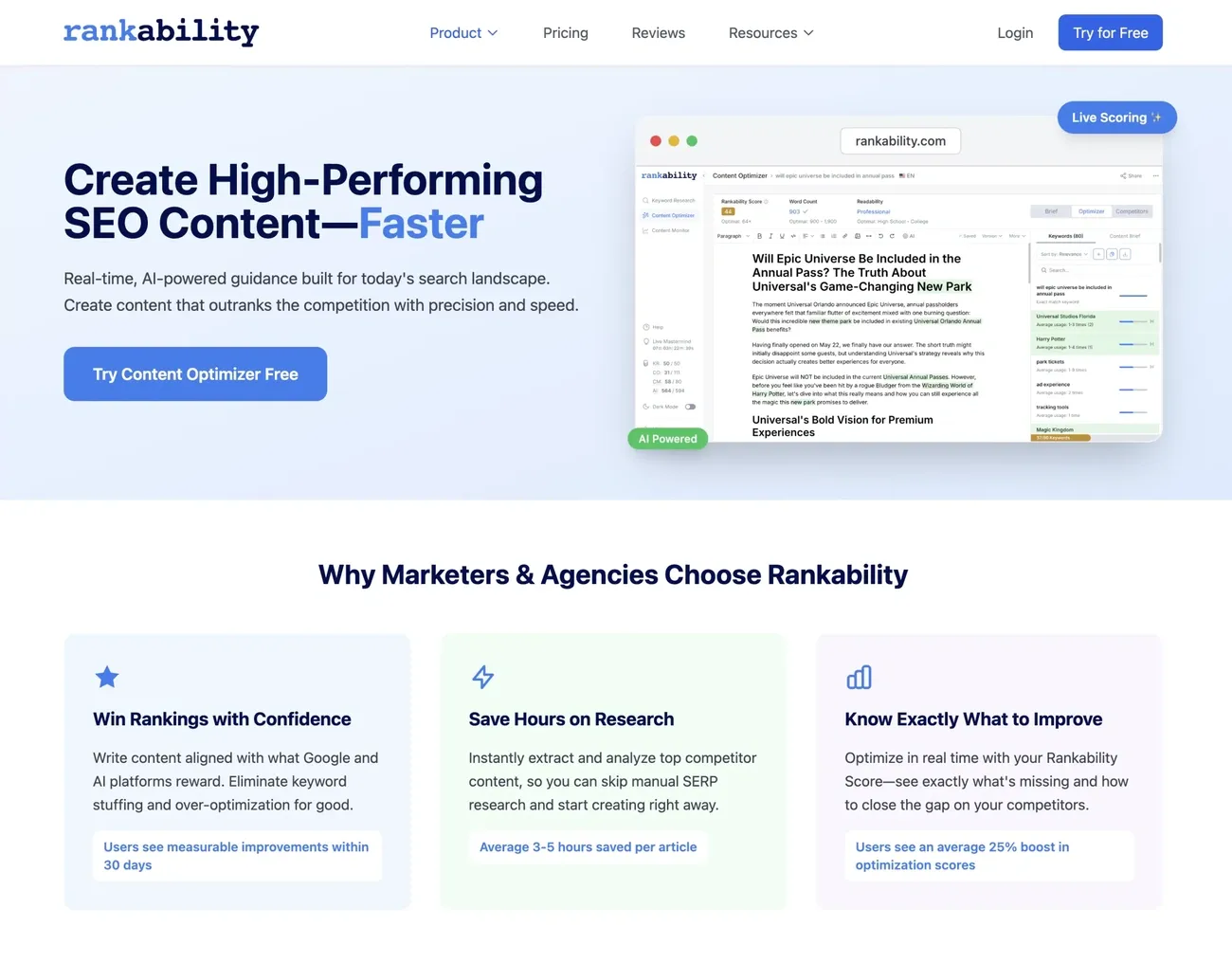
Image Source: Rankability
What It Is
Nathan Gotch and Simon L. Smith founded Rankability, an AI-powered SEO platform built for agencies and SEO professionals who need adaptable content optimization. The platform combines IBM Watson’s Natural Language Processing with Google’s own API to extract NLP data. Search engines use the same technology to grade content.
Key Features
The Content Optimizer serves as the platform’s core and provides live feedback as you build pages. It analyzes your content against current search results and assigns a Rankability score. This score shows how closely your writing lines up with NLP keywords and competitor strategies. Users reported ranking improvements of 50 positions after they applied the tool’s insights.
Keyword research tools pull data on search volume, intent, trends, CPC and difficulty. You can create goal-oriented strategies with this information. AI Content Briefs generate detailed outlines using data from top-performing competitors. The brief creation process goes from hours to minutes.
Content Monitors track your published pages daily and flag when content begins to lose relevance before rankings drop. The AI Search Analyzer tracks brand mentions in ChatGPT, Perplexity and Gemini. It monitors whether your content appears as citations in AI-generated answers.
Weekly mastermind calls provide live demonstrations and SEO training directly from Nathan Gotch.
Pros and Cons
Pros:
Accessible interface makes optimization straightforward
Accurate NLP suggestions using Google’s own technology
Weekly coaching sessions included in all plans
Requires minimal training and onboarding
Content monitoring with daily relevance tracking
Cons:
New platform with some tools still improving
No API access available as of 2026
Credits-based billing can create bottlenecks for high-volume agencies
Pricing
Rankability offers three monthly tiers:
|
Plan |
Price |
User Seats |
Content Optimizers |
AI Briefs |
|
SEO Specialist |
$149 |
2 |
20 |
80 |
|
SEO Expert |
$249 |
5 |
40 |
160 |
|
SEO Master |
$449 |
10 |
80 |
320 |
Annual plans receive 2 months free. A free trial is available.
Best For
SEO professionals and agencies managing multiple clients need workflow automation and standardized quality for content types of all kinds. The platform suits teams that require repeatable optimization systems and want to scale beyond single-writer operations.
Surfer SEO
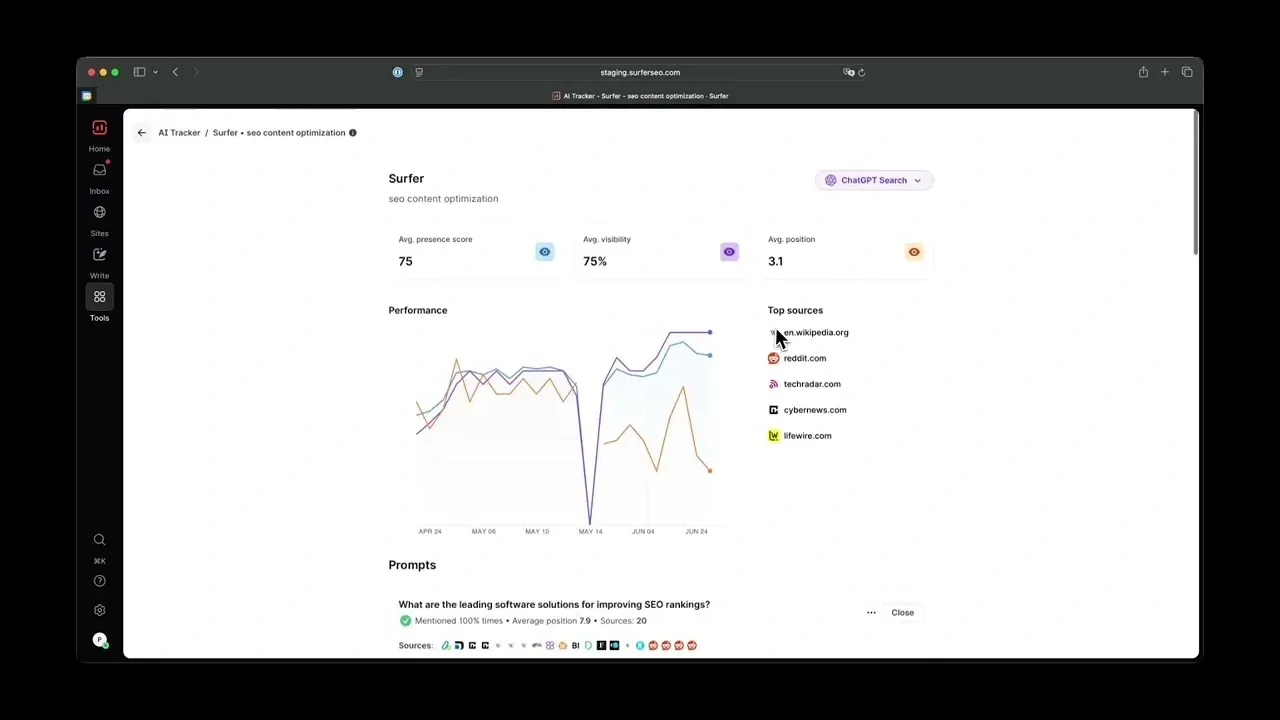
Image Source: Surfer
What It Is
Surfer SEO is a web-based content optimization platform that analyzes over 500 ranking factors to guide your writing process. The tool uses NLP solutions, machine learning and AI technology to reverse-engineer what makes top-ranking pages successful. Surfer has served over 150,000 content creators, SEOs and agencies after launching in 2017.
Key Features
The Content Editor provides live optimization as you write. It shows a live Content Score that updates with each keystroke. This score measures how well your content matches top-ranking pages and is the gold standard in the industry. You’ll see keyword suggestions ranked by importance. Terms like “used car insurance” appear before less critical phrases.
SERP Analyzer breaks down what’s working on page one. It reveals word count patterns, keyword usage and content structure across competitors. The Topical Map identifies content gaps based on keywords you already rank for. This helps build topical authority that 90% of SEOs think is important.
Content Audit connects to Google Search Console and pulls your top-performing pages. It flags those with low Content Scores for quick optimization wins. Grow Flow delivers weekly recommendations with estimated impact scores. AI Tracker monitors your brand mentions in ChatGPT, Perplexity and other AI-generated answers beyond traditional search.
Pros and Cons
Pros:
User-friendly with no learning curve
Live suggestions balance SEO with natural readability
Integrations with Google Docs, WordPress, ChatGPT and Jasper
4.8 rating on G2
Cons:
Credit limits can restrict high-volume users
Monthly costs start at $99, steep for small budgets
Easy to over-optimize and keyword stuff if you follow every suggestion rigidly
Pricing
|
Plan |
Monthly |
Annual |
Features |
|
Essential |
$99 |
$79 |
Core optimization, 5 AI articles and integrations |
|
Scale |
$219 |
$175 |
20 AI articles, audit features and CSV export |
|
Enterprise |
$999+ |
Custom |
API access, white-labeling and priority support |
Annual billing saves 20%. A 7-day money-back guarantee applies.
Best For
Content-focused teams that publish consistently and need informed optimization workflows. Agencies that manage multiple clients benefit from the Scale and Enterprise plans’ higher limits and collaboration features. The platform suits users with SEO experience who can balance tool suggestions with content quality judgment.
Semrush
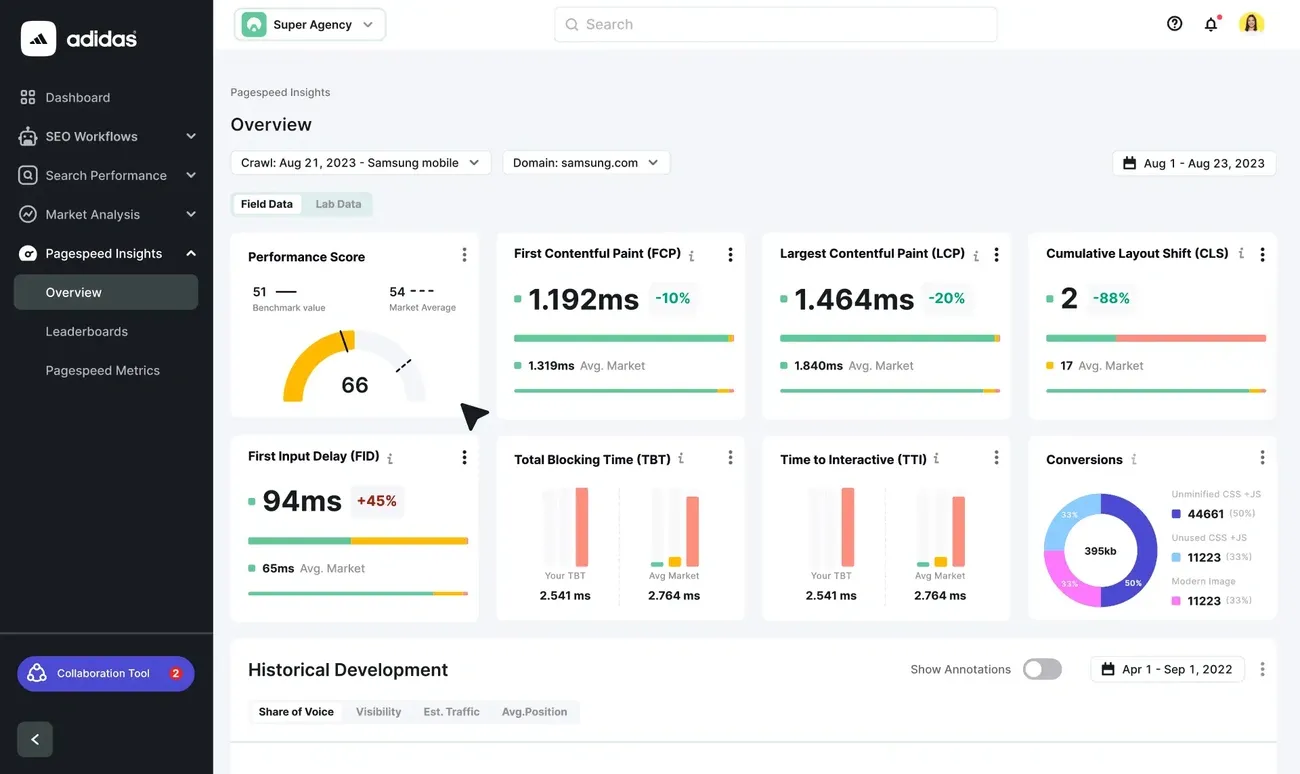
Image Source: www.semrush.com
What It Is
Semrush has served over 117,000 paying subscribers with its all-in-one digital marketing platform since 2008. The company launched Semrush One in October 2025 and combined traditional SEO tools with AI visibility tracking in a single dashboard. This platform addresses both conventional search optimization and brand visibility in AI-powered environments like ChatGPT, Perplexity and Google AI Overviews.
Key Features
Semrush One’s AI Visibility Toolkit monitors over 100 million prompts daily and tracks when your brand appears in AI-generated answers on ChatGPT, Perplexity, Gemini and Google AI Mode. The AI Analysis Report shows citation patterns and reveals which competitor sources AI platforms reference most often. Brand Performance analysis tracks visibility metrics and sentiment on these platforms.
Beyond AI monitoring, you access Semrush’s core SEO arsenal that spans 50+ tools. The Keyword Magic Tool taps into a database of 21.1 billion keywords. Backlink Analytics draws from 43 trillion links. This is the largest backlink database available. Site Audit crawls pages to flag technical issues. Position Tracking monitors rankings with smart filters to track SERP features. The Content Marketing Toolkit generates topic ideas and SEO-optimized briefs.
Pros and Cons
Pros: Reporting limits are generous and beat competing platforms. AI visibility tracking gives insights competitors lack. The platform covers SEO, PPC, content marketing and social media under one roof. Historical data access helps identify ranking changes.
Cons: Single user account per plan, even on top tiers. Additional users cost $45 to $100 monthly depending on plan. Keyword data covers Google only and excludes Bing and YouTube. Interface complexity overwhelms beginners.
Pricing
|
Plan |
Monthly |
Annual |
Keywords |
Websites |
Custom Prompts |
|
Starter |
$199 |
$165.17 |
500 |
5 |
50 |
|
Pro+ |
$299 |
$248.17 |
1,500 |
15 |
100 |
|
Advanced |
$549 |
$455.67 |
5,000 |
40 |
200 |
Annual billing saves 17%. A 14-day free trial applies to Starter and Pro+ plans.
Best For
Mid-sized agencies and enterprises managing multiple domains who need both traditional SEO analytics and AI visibility insights. The platform suits marketing teams requiring complete data in a variety of channels rather than single-purpose optimization.
Clearscope
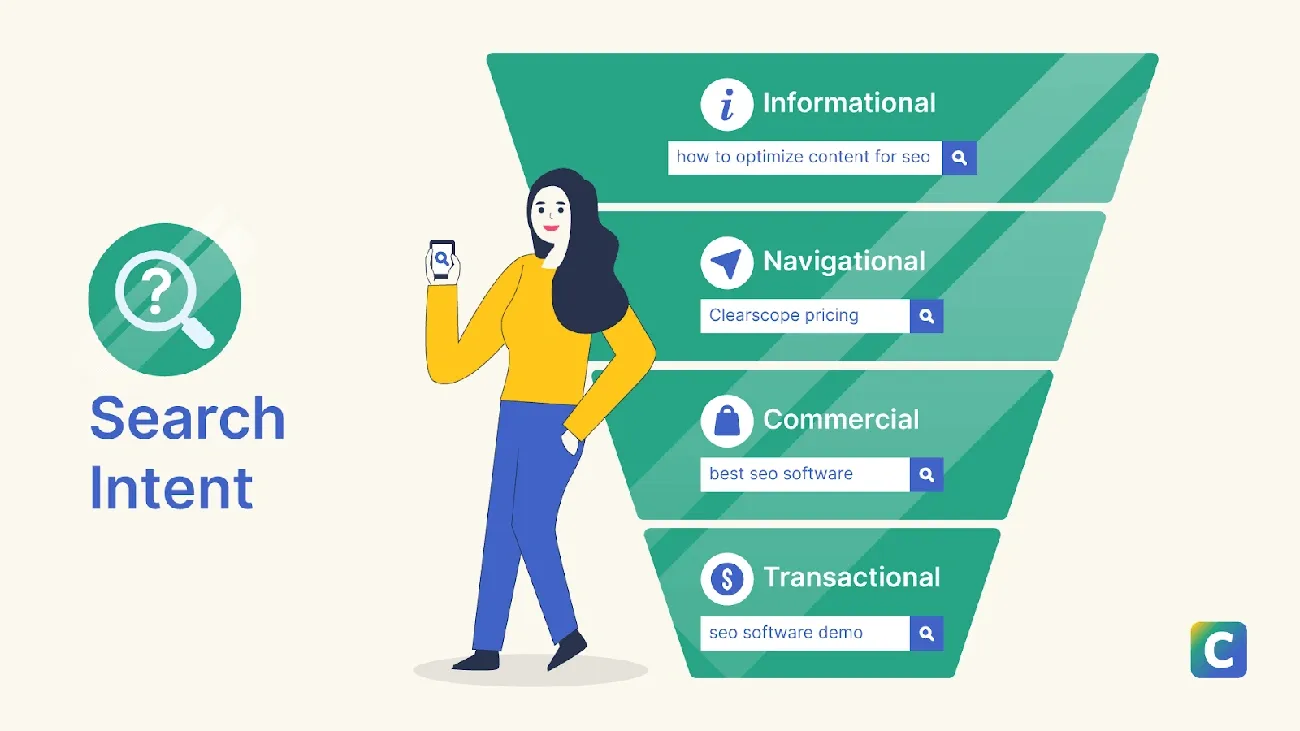
Image Source: Clearscope
What It Is
Clearscope positions itself as a discoverability platform rather than an all-in-one SEO suite. Natural language processing models from Google, OpenAI, and IBM Watson power the tool. It analyzes top-ranking search results to extract analytical recommendations for content optimization. Major brands including Adobe, Shopify, YouTube, and Intuit rely on Clearscope for their content strategies.
Key Features
Content Reports kick off the workflow by analyzing SERPs for your target keyword and surface relevant terms, common headings, and intent signals. The AI drafting feature guides you through searcher intent selection, content type choice, tone customization, and outline editing. It delivers drafts that get you 80% closer to publication.
The live Content Editor assigns grades from F to A++ as you write and tracks term usage against top competitors. Four tabs provide guidance: Terms shows prioritized keywords, Research displays People Also Ask questions, Outline reveals competitor heading structures, and Competitors lists the top 30 pages with their content grades. Integrations with Google Docs, WordPress, and Word eliminate copy-paste friction.
Content Inventory connects to Google Search Console and monitors published pages for content decay, technical issues, and striking distance queries ranking between positions 11-20. AI Tracked Topics (called Expand) monitors brand citations across ChatGPT, Gemini, and Perplexity. AI-powered internal linking suggests relevant anchor text live as you write.
Pros and Cons
The platform excels at enforcing quality standards across writing teams, with smooth integrations and valuable monitoring features. Users reported a 52% increase in organic traffic and an 83.7% boost in clicks after optimization. One team saw 721% click growth for German content.
Pricing sits at the premium end with low credit limits on lower tiers. It’s a specialized tool that requires separate platforms for backlink analysis and technical audits.
Pricing
|
Plan |
Monthly |
AI Tracked Topics |
AI Drafts |
Content Inventory |
|
Essentials |
$129 |
20 |
20 |
50 pages |
|
Business |
$399 |
50 |
20 |
300 pages |
|
Enterprise |
Custom |
Custom |
Custom |
Custom |
All plans include unlimited users and projects. Additional pages cost $25/month (Essentials) or $15/month (Business) per 100.
Best For
Content teams and agencies that prioritize in-depth optimization over volume. The platform suits marketers refreshing high-value content where quick ranking improvements justify the investment.
Frase
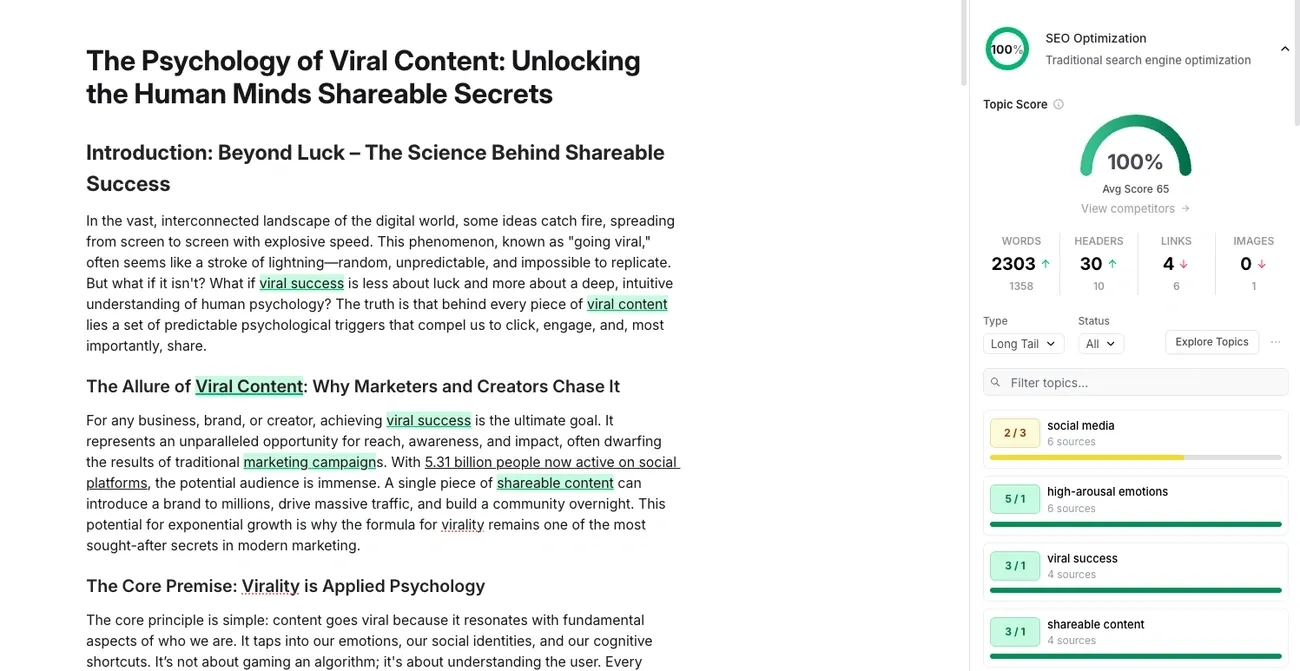
Image Source: www.frase.io
What It Is
Frase is 8 years old and uses Natural Language Processing to analyze the top 20 Google search results for any query. It extracts semantic entities used by competitors to guide content creation. The platform now integrates OpenAI’s GPT-3 model for content generation and delivers output nearly indistinguishable from human writing. Over 30,000 customers including marketers, writers and agencies use Frase.
Key Features
The Research panel processes top 20 results and displays word counts, header structures and image usage patterns. Question Research mines queries from Google, Bing, Quora and Reddit. It surfaces audience questions that strengthen FAQs and signal engagement to search engines.
Outline Builder filters competitor headings by H1s through H4s, long-tail keywords and questions. This removes hours of manual structuring. The AI Writer generates blog intros, FAQs, headlines and full drafts through features like the Outline To Draft Generator.
Content optimization assigns scores from 0-100% and shows alignment with competitors in real time. Internal linking recommendations appear after you connect Google Search Console data. The Content Analytics dashboard identifies content decay before rankings drop.
Pros and Cons
The platform unites research, outlining, drafting and optimization into one workflow. Users appreciate the 4.8 G2 rating and user-friendly interface. But AI-generated content requires human editing for tone and accuracy. The 4,000 monthly AI word cap without the Pro Add-On restricts high-volume users. It lacks keyword difficulty metrics, domain authority data and rank tracking found in detailed SEO suites.
Pricing
|
Plan |
Monthly |
Annual |
Articles/Month |
Users |
|
Solo |
$14.99 |
$12.66 |
4 |
1 |
|
Basic |
$44.99 |
$38.25 |
30 |
1 |
|
Team |
$114.99 |
$97.75 |
Unlimited |
3 |
Pro Add-On costs $35.00/month for unlimited AI words and keyword volume data.
Best For
Content writers and small teams executing SEO plans who need structured briefs and optimization guidance without complex technical audits. The Solo plan fits occasional publishers, whereas agencies benefit from Team tier collaboration features.
MarketMuse
Image Source: MarketMuse
What It Is
Aki Balogh and Jeff Coyle founded MarketMuse in 2013. The platform uses patented topic modeling technology to analyze content at a conceptual level rather than counting keywords. Siteimprove acquired the platform to simplify content workflows from ideation through publication. The tool builds semantic relationship maps between concepts within subject areas and scores your coverage against models derived from analyzing thousands of pages.
Key Features
Content Inventory crawls your site and maps topical authority to show expertise gaps and optimization opportunities. Personalized Difficulty scores estimate ranking difficulty for your specific site based on existing authority. These pair with Competitive Advantage metrics that show your head start over generic competitors.
The Optimize editor assigns immediate Content Scores that measure topical coverage against competitors. SERP X-ray breaks down top-ranking pages by topic coverage depth. Heatmaps visualize patterns across results. Content Briefs generate within minutes with target word counts, subtopics, questions and linking suggestions. Strategy plan subscribers access all 9 brief types including Comparison and Guide formats.
Connect module scans your inventory and suggests internal links between related pages to reinforce topical clusters.
Pros and Cons
Pros: Users reported 4x-10x traffic increases with optimized content. Structured guidance makes editorial standards measurable. Useful insights require minimal training.
Cons: Learning curve slows adoption at first. The platform emphasizes strategy over content generation. Premium pricing excludes smaller teams.
Pricing
|
Plan |
Monthly |
Users |
Queries |
Tracked Topics |
Briefs |
|
Free |
$0 |
1 |
10 |
0 |
0 |
|
Optimize |
$99 |
1 |
100 |
100 |
5 |
|
Research |
$249 |
3 |
Unlimited |
1,000 |
10 |
|
Strategy |
$499 |
5 |
Unlimited |
10,000 |
20 |
Annual billing available.
Best For
Mid-to-large content teams and agencies with dedicated strategists who value structured, evidence-based planning over volume production. The platform rewards teams comfortable pairing human editing with AI-driven topic suggestions.
Scalenut
Image Source: Scalenut
What It Is
Scalenut has evolved into a full-stack GEO (Generative Engine Optimization) platform that unites separate features into three plans. These plans help brands succeed on Google, AI platforms like ChatGPT and Perplexity, and social ecosystems. The platform combines content planning, creation, optimization, and AI visibility tracking in one workspace. More than 100,000 marketers trust Scalenut and give it a 4.8 rating.
Key Features
AI Visibility tracks prompts on ChatGPT, Google AIO, and Perplexity each week and monitors brand citations in AI-generated answers. Content creation capabilities include ready-to-rank GEO articles with volumes ranging from 55 to 575 articles monthly depending on plan tier. The GEO content audit analyzes 30 to 1,000 webpages monthly and identifies optimization opportunities before rankings drop.
The Content Optimizer assigns GEO Scores live and measures alignment on 11 parameters including prompt coverage, schema, key terms, and featured snippet readiness. Keyword Planner builds topic clusters, while Auto-Optimize generates content to fill detected gaps. Internal linking, traffic analysis, and auto-publish integrations with WordPress and Shopify make workflows efficient.
Pros and Cons
The all-in-one approach unites research, writing, and optimization tools. GEO Score provides practical guidance on gaps and content structure. Social UpReach for Reddit and Backlinks Marketplace add distribution channels.
But the learning curve requires solid SEO understanding. Auto-optimize features can produce generic output without brand customization. Modular pricing on four product pillars creates variable monthly costs that challenge budget forecasting.
Pricing
|
Plan |
Monthly |
Prompts Tracked |
Articles/Month |
Workspaces |
|
Starter |
$59 |
10 |
5 |
1 |
|
Plus |
$89 |
25 |
30 |
2 |
|
Professional |
$199 |
100 |
75 |
Unlimited |
Limited-time 50% discount available. Seven-day free trial included.
Best For
Growing teams and agencies building AI visibility as a core growth channel. Suits marketers producing high-volume SEO content who need unified tracking on traditional search and AI platforms.
Writesonic

Image Source: Writesonic
What It Is
Writesonic tracks brand visibility on traditional search engines and AI platforms like ChatGPT, Claude, and Perplexity. The platform serves over 13,000 marketing teams. It monitors 100 million prompts daily and analyzes 120M+ real conversations to understand how users query AI systems. The platform runs on advanced AI models including GPT-4o, Claude 3.5 Sonnet, and Gemini 1.5 Pro. It combines content generation with SEO optimization and Generative Engine Optimization (GEO) in one workflow.
Key Features
The AI visibility toolkit tracks citation patterns, share of voice, and sentiment analysis on 10+ AI platforms. Dynamic Content Creation guides writers through automated follow-up questions. It produces blog posts, product descriptions, and social media content with built-in SEO optimization. Integration with Ahrefs and Google Keyword Planner provides live keyword data. The Content Optimizer assigns live grades that measure how well content lines up with ranking content.
Chatsonic pulls live information from Google. Botsonic lets you build custom chatbots without coding. WordPress integration makes one-click publishing possible.
Pros and Cons
Users appreciate the user-friendly design, time-saving capabilities, and integrated SEO tracking features from a single dashboard. The platform handles various content types well. But the credit system feels restrictive. AI-generated content requires manual editing for accuracy. GEO features require Professional plans or higher.
Pricing
|
Plan |
Annual |
Articles/Month |
Audits/Month |
GEO Features |
|
Lite |
$39 |
15 |
6 |
No |
|
Standard |
$79 |
30 |
15 |
No |
|
Professional |
$199 |
100 |
40 |
Yes (3 platforms) |
|
Advanced |
$399 |
200 |
60 |
Yes (4+ platforms) |
|
Enterprise |
Custom |
Custom |
Custom |
Full access |
A free trial with 10 generations is available.
Best For
Marketing teams needing content versatility for multiple formats, SEO specialists tracking brand mentions in AI search results, and businesses building customer participation through chatbots.
SE Ranking
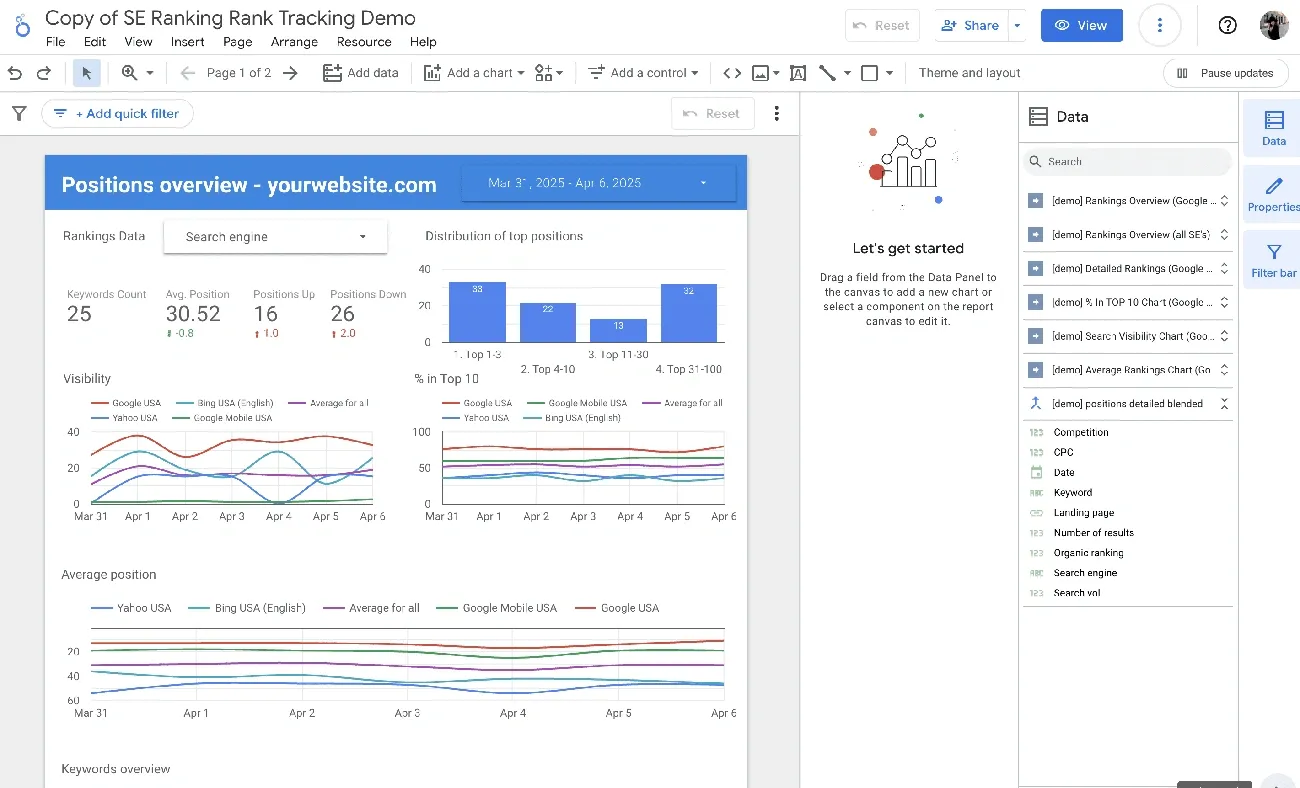
Image Source: SE Ranking
What It Is
SE Ranking functions as a professional workspace where teams manage audits, rankings and backlinks from one platform. The tool has served 1.5M+ SEO professionals since 2013. It applies AI to analyze datasets and automate routine processes through API integrations and no-code platforms.
Key Features
The AI Search Toolkit monitors visibility in AI Overviews, AI Mode, ChatGPT, Perplexity and Gemini. Content Editor analyzes competitor websites and provides writers with keyword and structure instructions. The AI Writer streamlines content creation with customizable tone and audience targeting. Automated traffic forecasting, predictive keyword suggestions based on competitor data and AI-powered reporting summaries round out the feature set.
Pros and Cons
The platform offers adaptable pricing and covers both traditional SEO and AI search optimization. Users on G2 praise its affordability and ease of use. New users face a learning curve despite available tutorials.
Pricing
|
Plan |
Monthly (Annual) |
Projects |
Keywords/Day |
AI Prompts/Day |
|
Core |
$103.20 |
10 |
2,000 |
100 |
|
Growth |
$223.20 |
30 |
5,000 |
250 |
Agency Pack adds $69/month, AI Search adds $71.20/month.
Best For
SEO specialists, agencies and in-house teams needing workflow automation.
NeuronWriter
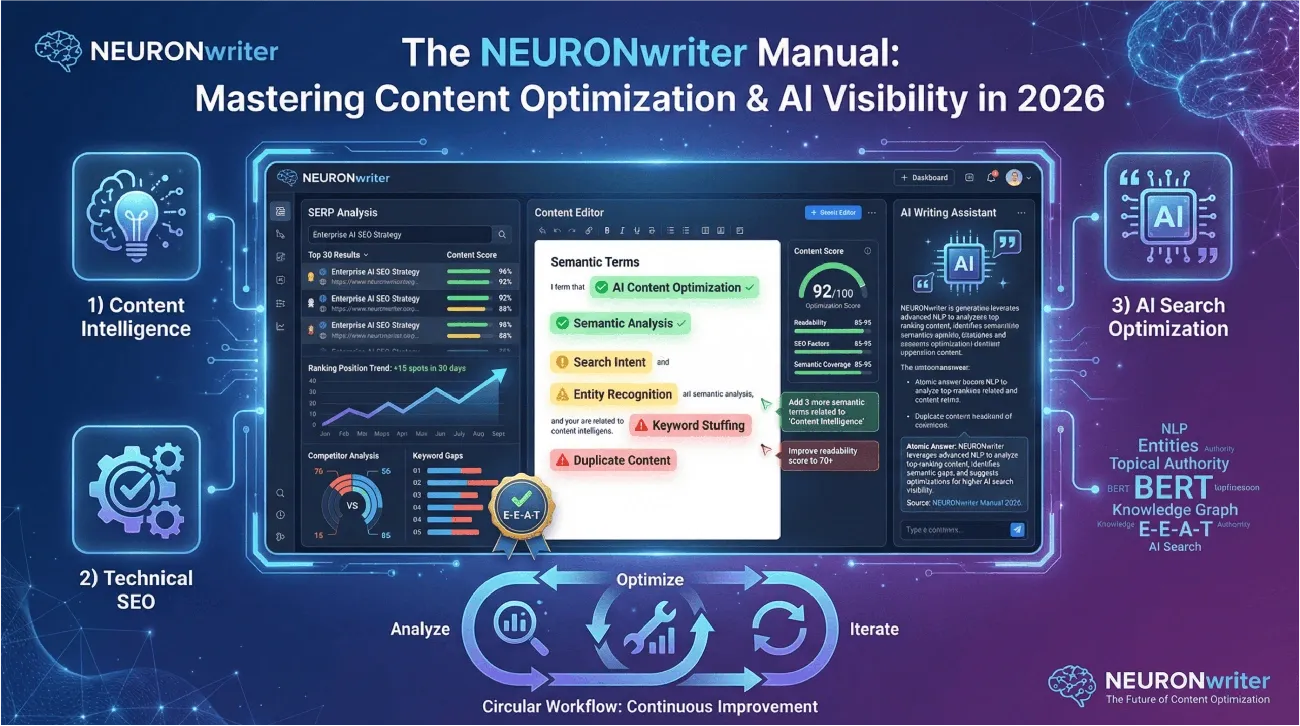
Image Source: NEURONwriter
What It Is
NeuronWriter applies semantic SEO principles and natural language processing to analyze top-ranking pages. It extracts keywords and structure patterns that inform your content strategy. The platform has helped over 100,000 customers analyze more than 1,300,000 pieces of content. Brands like Itaka, Decathlon, Electrolux and Castorama employ the tool.
Key Features
SERP analysis examines the top 30-50 search results and reveals word counts, heading hierarchies, keyword density and content structure. The content editor assigns live scores as you write and measures alignment against competitive standards. AI-powered templates generate outlines, paragraphs and full drafts using GPT-3.5-turbo.
Internal linking suggestions connect topically related articles. Google Search Console integration provides performance tracking. A plagiarism checker will give content originality on Gold plans and above.
Pros and Cons
Pros: Research tools deliver in-depth SERP insights. The interface remains accessible. One-click WordPress publishing optimizes your workflow. Pricing starts under $25, lower than Surfer SEO’s $79 entry point.
Cons: Limited AI template variety with focus on articles. Performance slows when loading tools at times. New users face a learning curve.
Pricing
|
Plan |
Monthly |
Annual |
Projects |
Analyzes |
AI Credits |
|
Bronze |
$23 |
$19 |
2 |
25 |
15,000 |
|
Silver |
$45 |
$37 |
5 |
50 |
30,000 |
|
Gold |
$69 |
$57 |
10 |
75 |
45,000 |
|
Platinum |
$93 |
$77 |
25 |
100 |
60,000 |
|
Diamond |
$117 |
$97 |
50 |
150 |
75,000 |
Annual billing provides 40% savings.
Best For
Freelance writers, bloggers and small agencies who seek affordable content optimization without enterprise pricing.
Keyword Insights
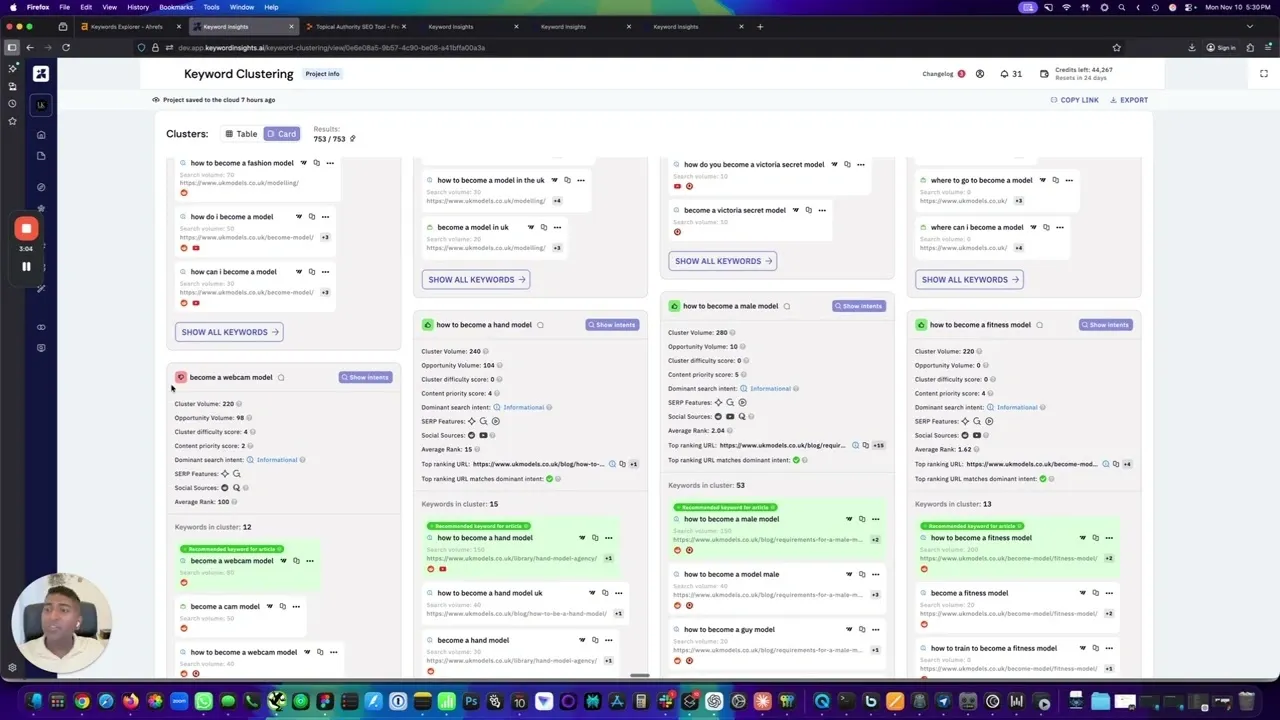
Image Source: Keyword Insights
What It Is
Keyword Insights is the first platform designed to help you build and own topical authority in your niche. The tool pulls live data from Google Autocomplete, Reddit, and People Also Ask. It captures immediate trending keywords that static databases miss. Keywords get clustered based on what Google already ranks together. This reveals the exact pages you need to create for smarter SEO strategies.
Key Features
Keyword Discovery generates thousands of keyword ideas from seed terms, domains, or URLs. It surfaces opportunities competitors overlook. The clustering module groups up to 2.5 million keywords at once. Users report up to 1200% time savings. Tasks that once took days now take 30 to 60 minutes. Grouping 20,000 keywords is one example.
Search Intent analysis categorizes keywords as informational, commercial, or transactional. It does this by looking at live SERPs. Content Briefs use AI and an Information Gain machine learning model to create outlines with key headings and questions. The AI Writer Agent automates research and identifies content gaps. It generates optimized articles based on competitor insights.
Competitor Visibility measures your coverage against rivals for specific topics. The platform detects keyword cannibalization and surfaces internal linking opportunities. It also tracks high-intent Reddit, Quora, and YouTube conversations where your brand can earn credible mentions.
Pros and Cons
Agencies reduced keyword research time by a lot. Clients saw traffic jump from 100 to 600 daily visits. Another went from 30,000 to 60,000 within 90 days. The interface remains accessible with minimal training required.
But learning to use advanced features properly takes time. The credit-based billing structure can create bottlenecks for high-volume operations.
Pricing
|
Plan |
Monthly |
Clustering Credits |
Keyword Searches |
Briefs |
|
Simple |
$58 |
12,000 |
5 |
10 |
|
Professional |
$145 |
36,000 |
10 |
30 |
|
Premium |
$299 |
100,000 |
20 |
60 |
Annual subscriptions receive 20% off. A $1 trial covers 7 days with 5,000 credits.
Best For
Content marketers and SEO agencies building topical authority through structured keyword clustering and informed content planning at scale.
Outranking
Image Source: Outranking
What It Is
Outranking builds content strategies from live SERP analysis rather than generic AI prompts. The platform scans the top 20 competitors before you write anything. Standard AI writers don’t compare. The platform uses a research-first engine that identifies what Google rewards in live search results.
Key Features
The Concepts feature extracts factual discussion points from top-ranking pages. This grounds AI drafts in actual data rather than hallucinated content. SERP-based keyword clustering groups up to 100,000 keywords by analyzing common ranking URLs. This builds topical authority in a methodical way.
Content briefs include competitor word counts, domain authority, backlinks and structure analysis. Live SEO scoring reviews over 10 on-page factors including title optimization, content uniqueness and depth. Automatic internal linking suggestions connect related pages based on semantic relevance.
Pros and Cons
Pros: Replaces up to 5 separate tools. Clickworker reported a 1000% increase in blog clicks after implementation[611]. Factual AI output requires less editing.
Cons: Steep learning curve with unconventional interface[622]. Credit system complicates usage forecasting. Some users report UI bugs and inconsistent support.
Pricing
|
Plan |
Monthly |
Annual |
SEO Documents |
Users |
|
Starter |
$29 |
$25 |
5 |
1 |
|
SEO Writer |
$79 |
$69 |
15 |
2 |
|
SEO Wizard |
$159 |
$139 |
30 |
3 |
Best For
Experienced SEO professionals and agencies requiring analytical content strategies with simplified optimization workflows.
SEOwind
Image Source: SEOwind
What It Is
SEOwind combines AI automation with human editorial through its Cyborg Method. AI agents handle briefs and drafts while editors refine tone and accuracy. The platform started serving in-house teams creating EEAT-compliant articles and then expanded into a white-labeled production engine for agencies. It supports content creation in 12 languages and 180+ locations.
Key Features
AI-generated outlines analyze SERP data, keyword clusters and People Also Ask questions. You choose between GPT-4o, Claude 3.7, or Gemini 1.5 models at no pricing difference. The Humanize mode improves readability and makes drafts feel less robotic. Content Update reviews existing pages using EEAT principles and explains why it makes specific changes. Internal linking connects to Google Search Console for anchor text suggestions. Weekly performance tracking scales winning content and flags underperformers.
Pros and Cons
Pros: Creates briefs in minutes versus hours. Easy-to-use interface simplifies content research. One case study reported 540% organic click increases.
Cons: Platform access starts at $189 monthly. Custom insights require Pro or Agency plans. Brief editor glitches occasionally when reordering headings.
Pricing
|
Plan |
Monthly |
Articles |
Projects |
|
Platform |
$189 |
20 |
2 |
|
SEO Services |
$3,000+ |
Custom |
Custom |
|
White-Label |
Custom |
Custom |
Custom |
Best For
Content teams scaling production in-house, agencies delivering finished white-labeled content and businesses replacing manual SEO workflows with structured AI-augmented systems.
Comparison Table
Comparison Table: 13 Best AI SEO Tools for 2026
|
Tool |
Starting Price (Monthly) |
Starting Price (Annual) |
Free Trial/Plan |
Key Strength |
Main Limitation |
Best For |
|
Rankability |
$149 |
$124.17 (2 months free) |
Yes – Free trial available |
Uses IBM Watson NLP + Google API to optimize content; has weekly coaching sessions |
New platform with some tools still improving; no API access |
SEO professionals and agencies managing multiple clients who need workflow automation |
|
Surfer SEO |
$99 |
$79 |
7-day money-back guarantee |
Industry gold standard Content Score with immediate optimization; 4.8 G2 rating |
Credit limits restrict high-volume users; easy to over-optimize if you follow suggestions rigidly |
Content-focused teams publishing consistently who need informed optimization workflows |
|
Semrush |
$199 |
$165.17 |
14-day free trial (Starter & Pro+ plans) |
Largest backlink database (43 trillion links); AI visibility tracking for 100M+ prompts daily |
Single user account per plan; additional users cost $45-$100/month |
Mid-sized agencies and enterprises managing multiple domains who need complete data for all channels |
|
Clearscope |
$129 |
Not mentioned |
Not mentioned |
NLP models from Google, OpenAI, and IBM Watson; 52% traffic increase and 83.7% click boost reported |
Premium pricing with low credit limits on lower tiers |
Content teams and agencies that prioritize in-depth optimization over volume |
|
Frase |
$14.99 |
$12.66 |
Not mentioned |
Combines research, outlining, drafting, and optimization; 4.8 G2 rating |
4,000 monthly AI word cap without Pro Add-On; lacks keyword difficulty and rank tracking |
Content writers and small teams executing SEO plans who need structured briefs |
|
MarketMuse |
$99 (Optimize plan) |
Available |
Free plan available (10 queries) |
Patented topic modeling technology; users reported 4x-10x traffic increases |
Learning curve slows initial adoption; premium pricing excludes smaller teams |
Mid-to-large content teams with dedicated strategists who value informed planning |
|
Scalenut |
$59 |
Not mentioned (50% discount available) |
7-day free trial |
Full-stack GEO platform tracking AI visibility; 4.8 rating from 100,000+ marketers |
Learning curve requires solid SEO understanding; modular pricing challenges budget forecasting |
Growing teams building AI visibility as core growth channel with high-volume content needs |
|
Writesonic |
$39 (annual pricing shown) |
$39 |
Free trial with 10 generations |
Monitors 100M prompts daily for 10+ AI platforms; integrates with Ahrefs and Google Keyword Planner |
Credit system feels restrictive; GEO features require Professional plans or higher |
Marketing teams needing content versatility for multiple formats and AI search tracking |
|
SE Ranking |
$103.20 |
$103.20 |
Not mentioned |
Scalable pricing covering traditional SEO and AI search optimization; serves 1.5M+ professionals |
New users face learning curve despite available tutorials |
SEO specialists, agencies, and in-house teams needing workflow automation |
|
NeuronWriter |
$23 |
$19 |
Not mentioned |
Affordable pricing (under $25 vs Surfer’s $79); analyzes top 30-50 SERP results |
Limited AI template variety; performance slows occasionally when loading tools |
Freelance writers, bloggers, and small agencies seeking affordable content optimization |
|
Keyword Insights |
$58 |
$46.40 (20% off) |
$1 trial for 7 days (5,000 credits) |
First platform designed for topical authority; clusters up to 2.5M keywords with 1200% time savings |
Learning curve for advanced features; credit-based billing creates bottlenecks |
Content marketers and SEO agencies building topical authority through keyword clustering at scale |
|
Outranking |
$29 |
$25 |
Not mentioned |
Research-first engine using immediate SERP analysis; Clickworker reported 1000% blog click increase |
Steep learning curve with unconventional interface; UI bugs and inconsistent support reported |
Experienced SEO professionals and agencies requiring informed content strategies |
|
SEOwind |
$189 |
Not mentioned |
Not mentioned |
Cyborg Method combining AI automation with human editorial; 540% organic click increases reported |
Platform access starts at $189 monthly; brief editor glitches occasionally |
Content teams scaling production in-house and agencies delivering white-labeled content |
Conclusion
The right AI SEO tool depends on your specific needs and budget. Agencies managing multiple clients will benefit from platforms like Rankability or Semrush. Freelance writers might find NeuronWriter or Frase more budget-friendly. Each tool excels in different areas—content optimization, AI visibility tracking, or topical authority building.
Identify your biggest content challenge first. Are you struggling with research or tracking AI citations? Match that need to the tool strengths outlined above. Most platforms offer free trials, so test before you commit to annual plans. Your perfect AI SEO stack awaits.
Ready to Dominate Local Search in the RGV?
We build high-performance websites with built-in semantic structure and local entity schemas. Let's make your business the authority in South Texas.

Written by Carlos Guzmán
Carlos Guzmán is the founder of RGV Web — a web designer and SEO specialist with 20+ years of experience helping small businesses in Mexico and the U.S. turn their websites into real business assets, from design and development to SEO, automation, and e-commerce.